
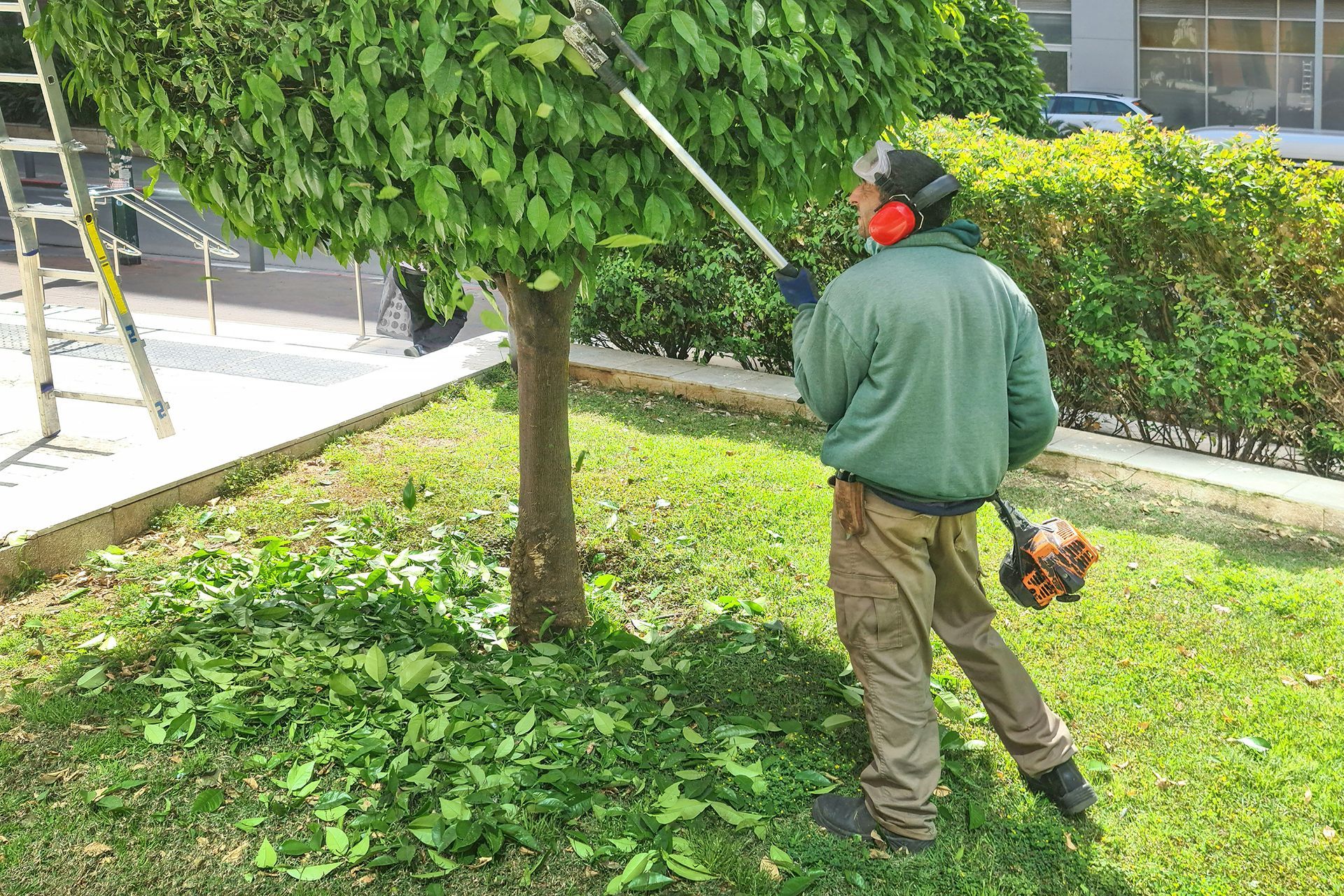
Pruning Decisions That Support Long-Term Plant Structure
Tree and shrub care in Splendora for residential and commercial landscapes where improper pruning timing or technique has reduced plant vigor or created entry points for disease
North Texas ice storms and extreme summer heat both stress ornamental trees and shrubs in ways that show up slowly — ice damage weakens branch attachment points that fail in subsequent wind events, and summer heat stress shows as premature leaf drop or tip dieback that is often misread as disease rather than environmental injury. Scott's Manicured Lawns provides tree and shrub trimming, pruning, and care services in Splendora and surrounding communities, applying species-specific timing and technique rather than scheduling cuts by season alone. Properties across The Woodlands, Spring, and Tomball where ornamental plantings are a primary component of landscape value need pruning that supports plant structure rather than creates recovery problems.
The timing of pruning cuts directly affects plant response — spring-blooming shrubs pruned before they flower lose the season's buds, while dormant-season pruning on the same plants allows them to set and carry blooms before cuts are made. Heading cuts — removing stems at an arbitrary point to reduce overall size — stimulate weak, dense regrowth that requires repeated cutting and creates structural problems in the canopy over time. Scott's Manicured Lawns uses thinning cuts and selective removal to maintain natural plant form and reduce density without triggering the regrowth pattern that heading produces.
Schedule a property walkthrough to assess current tree and shrub conditions and identify pruning timing and technique requirements for each species in the landscape.
Why Pruning Timing and Technique Prevent Long-Term Decline
Every pruning cut is a wound the plant must close — species-specific timing aligns cuts with the period when the plant's growth energy is directed toward wound closure and new development. Pruning during periods of active stress, including North Texas summer heat events, slows the plant's ability to compartmentalize the wound and increases susceptibility to fungal entry at the cut site. For deciduous trees and shrubs, late dormancy — just before spring growth initiates — provides the most favorable conditions for wound closure and rapid canopy recovery after structural work.
After correctly timed and executed pruning, the visible result is a plant with natural branching structure, clear light penetration through the canopy, and no water sprouts or dense regrowth clusters at cut sites within the same growing season. Shrubs that were previously sheared into geometric shapes begin recovering natural form through selective thinning over two to three seasons, showing interior branching structure and even light distribution rather than a dense outer shell over bare interior stems. Tree canopies cleared of crossing branches and deadwood show improved airflow and more balanced load distribution visible in the next wind event.
Tree and shrub care includes assessment of each plant's current health before cuts are made — a tree showing stress signs may require a different approach than a structurally sound specimen receiving routine maintenance. Deadwood removal is prioritized separately from structural pruning because hazardous deadwood warrants attention regardless of season or timing considerations. Scott's Manicured Lawns maintains ongoing care relationships that allow the crew to track plant health across seasons and adjust the approach based on how individual specimens respond to the regional climate year over year.
Common Questions About Tree and Shrub Care
Before scheduling tree and shrub care, property owners typically want to know how pruning timing affects plant response, what distinguishes trimming from structural pruning, and when North Texas conditions create windows for or against significant cutting.
What is the difference between trimming and pruning in terms of plant health impact?
Trimming typically refers to reducing size or maintaining a shape — pruning is the selective removal of specific stems, branches, or deadwood to improve structure, health, or airflow, and the two require different tools and different decision criteria for each plant.
Why do heading cuts on shrubs create more maintenance work over time?
Heading cuts stimulate multiple buds below each cut to push vigorous new growth, which quickly reaches or exceeds the original height and creates a denser exterior shell that shades out interior stems — the result is a plant that requires more frequent cutting without improving in structure or appearance.
When should trees and shrubs be pruned in the Splendora area?
Timing depends on species — spring bloomers are pruned after they flower, summer bloomers are pruned in dormancy, and most deciduous trees receive structural work in late winter before spring growth initiates; summer heat reduces the plant's capacity to recover from significant pruning cuts.
How does ice storm damage in North Texas change the pruning approach for ornamental trees?
Ice-damaged limbs that appear intact sometimes have split attachment points only visible after close inspection — removing structurally compromised wood after an ice event reduces the risk of limb failure in the following wind season, and that assessment should happen before any routine pruning proceeds.
What signs indicate that a tree or shrub needs professional assessment before any pruning work is scheduled?
Sudden dieback in one section of the canopy, weeping or oozing at branch attachment points, significant lean that has developed over a single season, or soil heaving in the root zone all indicate conditions that require evaluation before pruning decisions are made.
Scott's Manicured Lawns provides tree and shrub care tied to each species' pruning window and the property's specific mix of ornamentals — schedule a landscape assessment to review current plant conditions and develop a care plan suited to your property's long-term health requirements.