
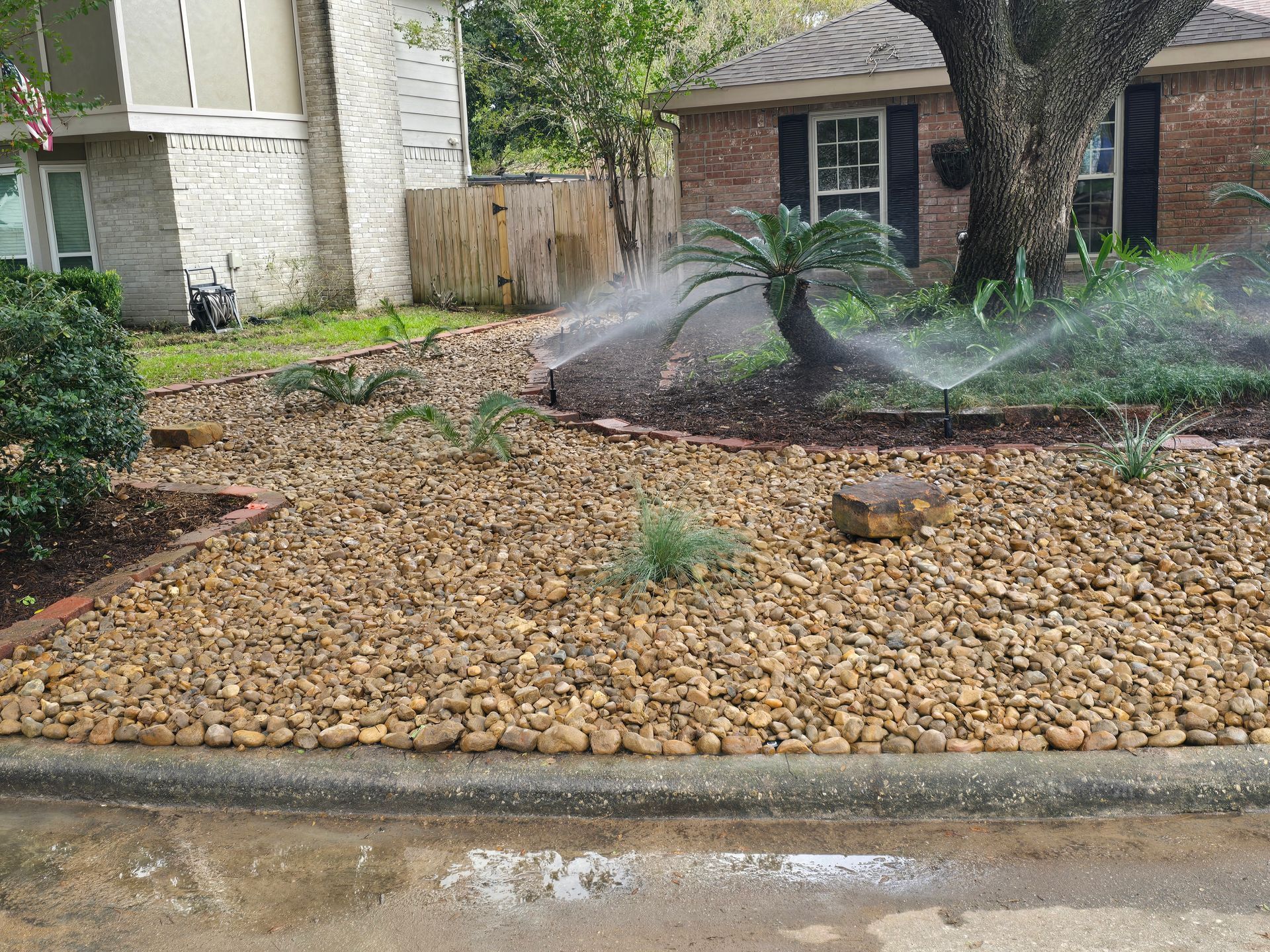
Irrigation Built for Texas Soil Conditions
Sprinkler and irrigation services in Splendora for properties losing turf coverage due to clay soil infiltration mismatches and seasonal drought pressure
Designing a residential irrigation system in North Texas starts with identifying soil infiltration rates before determining zone layout, head type, or run times. Scott's Manicured Lawns engineers and installs irrigation systems in Splendora and the North Houston service corridor, working from a site-specific design rather than a standard head-spacing template. Clay-heavy soils common to this region hold water at the surface while sandy transitions drain before turf can absorb it — a single-zone layout that ignores that variation leads to chronic overwatering in one section and drought stress in another.
Each system Scott's Manicured Lawns installs is zoned based on plant material water requirements, slope, and soil type — factors that determine run frequency and head selection. On clay-dominant properties, rotary heads reduce surface runoff by applying water at lower precipitation rates than standard fixed-spray heads, a difference that matters when the ground already holds saturation longer than a short-cycle schedule expects. Seasonal drought across the North Houston area also creates municipal line pressure variation, making pressure-regulation equipment a functional requirement rather than an optional upgrade.
Request a site-specific irrigation assessment to map zone requirements and identify where coverage, pressure, or head selection is mismatched to your property's soil conditions.
Why Irrigation Failures Lead to Long-Term Turf and Water Costs
Most irrigation problems develop from systems originally installed without site-specific zone design — heads placed at uniform spacing regardless of slope, soil type, or plant material differences across zones. A diagnostic visit checks head output, controller programming, valve function, and line pressure zone by zone to identify where the system is underperforming. For Splendora-area properties on clay-heavy lots, this typically reveals zones running on schedules that don't match the soil's actual absorption capacity, producing simultaneous runoff and turf damage in adjacent sections.
After a correctly calibrated or newly installed system completes its first full season, visible changes include uniform turf color across zones, elimination of the persistent dry patches that appear mid-cycle, and the absence of water pooling along edges and hardscape. Run times aligned to soil infiltration and seasonal conditions mean the system applies water when turf can actually absorb it rather than running off into gutters or sitting at the surface. Scott's Manicured Lawns provides year-round maintenance services — including seasonal line blowouts — to preserve system performance through winter.
Blowout timing in North Texas varies year to year but the process needs to occur before the first meaningful freeze to prevent cracked valve bodies and damaged poly fittings, a repair that costs significantly more than the blowout itself. Compressor volume during blowout also matters: too much pressure damages fittings while too little leaves residual water in the lines. Repairs to valves, heads, and controllers are handled through the same maintenance relationship as new installations.
Common Questions About Sprinkler System Installation
Irrigation questions often center on how zone counts are determined, what affects installation cost, and what property owners in this part of North Texas can expect from seasonal maintenance.
What determines how many zones a residential irrigation system needs?
Zone count depends on separating plant types with different water requirements — turf, shrubs, and drip-irrigated beds each need individual zone control to avoid overwatering one area while underwatering another.
How does clay soil change the sprinkler heads and schedule used on a property?
Clay soil's slower infiltration rate requires rotary-style heads over standard spray heads and longer intervals between cycles — running shorter, more frequent cycles on clay causes surface runoff before water penetrates the root zone.
When is the right time to have irrigation lines blown out in the Splendora area?
Blowout service is appropriate after temperatures begin holding below freezing overnight, typically between late November and January depending on the year — each week of delay after that point increases risk to valve bodies and line fittings.
What are visible signs that an irrigation system needs professional repair rather than controller adjustment?
Dry zones that don't recover after a full cycle, water that continues running from a head after the valve closes, and pressure that drops visibly mid-zone all indicate mechanical failures that reprogramming the controller alone won't resolve.
How does plant material selection affect zone design in a new system?
High-water perennials and drought-tolerant native plants have incompatible watering schedules — placing them in the same zone either stresses the drought-tolerant plants through overwatering or starves the perennials, so correct zone design separates them from the start.
Scott's Manicured Lawns handles irrigation design, installation, and maintenance for residential and commercial properties — schedule a system evaluation to review current zone performance or discuss a new installation designed around your property's specific soil profile and plant layout.